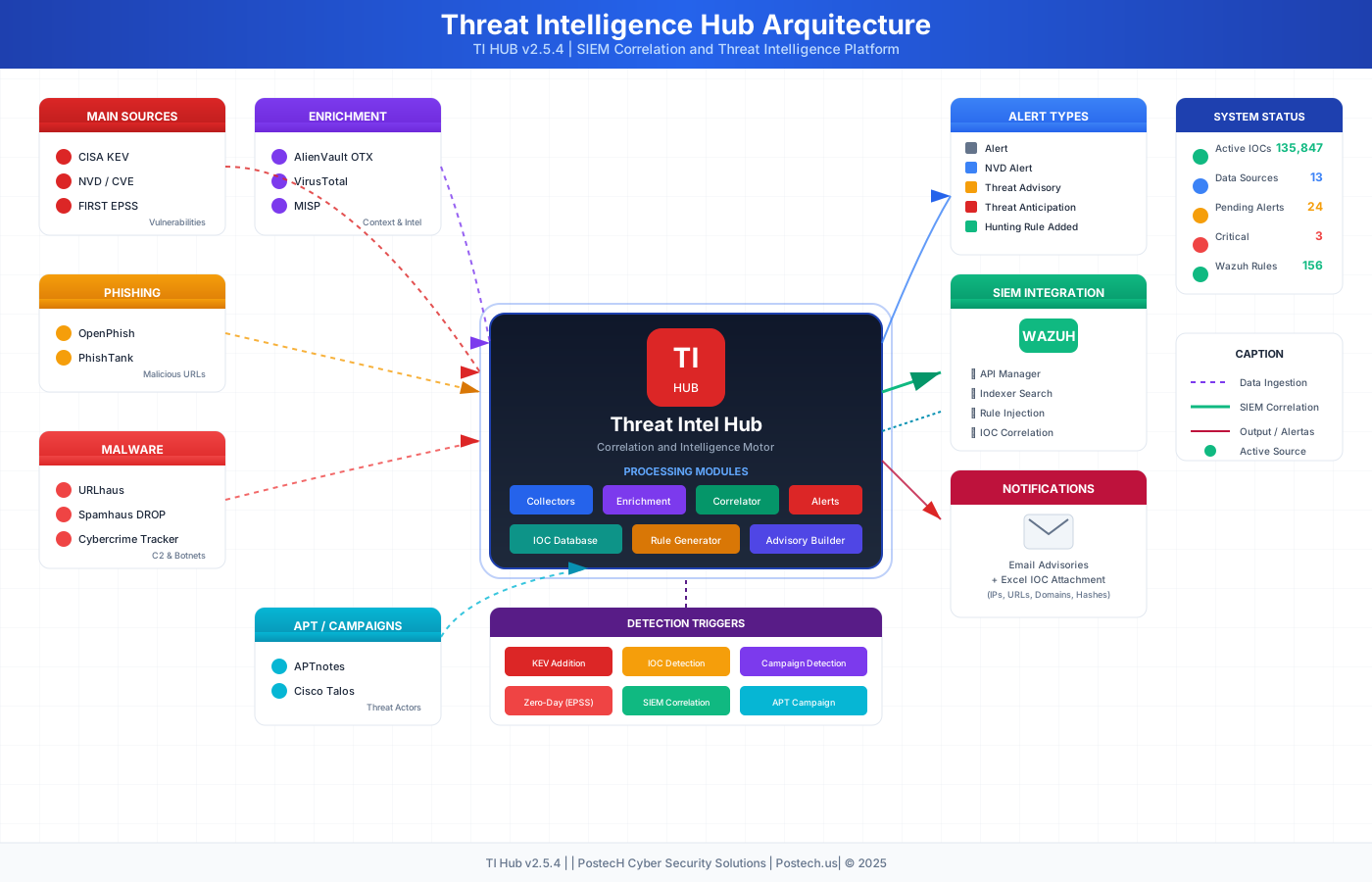


Actionable Threat Intelligence. Proactive Protection.
Aggregate, correlate, and act on threats before they impact your organization.
TI Hub transforms scattered data from multiple sources into precise alerts and automated detection rules.
VALUE PROPOSITION
The problem
Security teams face a flood of information: thousands of IOCs every day, multiple threat intelligence feeds, constantly published CVEs, and the pressure to detect threats before it is too late. The information exists, but it is fragmented, lacks context, and is difficult to operationalize.
The solution
Threat Intel Hub automates the collection, enrichment, correlation, and distribution of security intelligence. It converts raw data into actionable intelligence, generates contextualized alerts, and automatically creates detection rules in your SIEM.
KEY FEATURES
Multi-Source Aggregation
Automatically collect intelligence from 13+ specialized sources, including CISA KEV, NVD, EPSS, AlienVault OTX, VirusTotal, MISP, Cisco Talos, URLhaus, Spamhaus, OpenPhish, PhishTank, and more. One platform, all your intelligence sources.
Intelligent Correlation
Correlation engine that cross-references IOCs with your historical database and real-time SIEM events. Identify active threats in your environment before they cause damage.
Automated Detection
Automatic generation of Wazuh detection rules when new relevant IOCs are identified. No manual intervention, no delays, immediate protection.
Contextualized Alerts
Five types of notifications categorized by severity and context. Each alert includes the information required to take action.
- Alert — General notifications without specific IOCs
- NVD Alert — Critical vulnerabilities (CVEs with EPSS > 0.8 or zero-days)
- Threat Advisory — Threats with IOCs from sources such as Cisco Talos, Spamhaus, URLhaus
- Threat Anticipation — Matches between IOCs and SIEM events
- Threat Hunting Rule Added — Confirmation of a detection rule added to Wazuh
Exportable IOCs
Excel attachments included in every notification with IPs, URLs, domains, and hashes (MD5, SHA1, SHA256) ready to import into your security tools or share with your team.
Native SIEM Integration
Bi-directional integration with Wazuh: API-based matching, automatic rule injection, and continuous correlation with events from your infrastructure.
ALERT TYPES
| Type | Description | Priority |
|---|---|---|
| Alert | General notifications without specific IOCs | Medium |
| NVD Alert | Critical vulnerabilities (CVEs with EPSS > 0.8 or zero-days) | High |
| Threat Advisory | Threats with IOCs from sources such as Cisco Talos, Spamhaus, URLhaus | High |
| Threat Anticipation | Matches detected between IOCs and SIEM events | Critical |
| Threat Hunting Rule Added | Confirmation of a detection rule added to Wazuh | Informational |
INTEGRATED INTELLIGENCE SOURCES
Vulnerabilities and CVEs
- CISA KEV — Known Exploited Vulnerabilities Catalog
- NIST NVD — National Vulnerability Database
- FIRST EPSS — Exploit Prediction Scoring System
Enrichment and Context
- AlienVault OTX — Community threat pulses
- VirusTotal — File and URL analysis
- MISP — Threat intelligence sharing platform
Phishing and Fraud
- OpenPhish — Phishing URL feeds
- PhishTank — Collaborative phishing database
Malware and C2
- URLhaus — Malware distribution URLs
- Spamhaus DROP — Malicious IP blocklists
- Cybercrime Tracker — C2 servers and botnets
APT and Campaigns
- APTnotes — APT group documentation
- Cisco Talos — Threat research and intelligence
KEY BENEFITS
| Role | Key Benefits |
|---|---|
| SOC Team |
|
| Threat Hunters |
|
| CISOs |
|
OPERATIONAL FLOW
1. COLLECTION
   RSS feeds, REST APIs, CSV, JSON, HTML scraping
   ↓
2. NORMALIZATION
   IOC extraction: IPs, URLs, domains, hashes
   ↓
3. ENRICHMENT
   OTX, VirusTotal, MISP – context and reputation
   ↓
4. CORRELATION
   Historical database + Wazuh SIEM
   ↓
5. CATEGORIZATION
   Threat type, priority, alert category
   ↓
6. RULE GENERATION
   Automatic injection into Wazuh
   ↓
7. NOTIFICATION
   Email advisory + IOC Excel attachment
USE CASES
Proactive Zero-Day Detection
When CISA adds a vulnerability to the KEV catalog or NVD publishes a critical CVE with a high EPSS score, TI Hub immediately generates a critical-priority alert and searches for related indicators in your SIEM.
Phishing Campaign Response
When new phishing URLs are detected in OpenPhish or PhishTank, the system enriches them with VirusTotal, generates blocking rules in Wazuh, and notifies the team with the complete list of indicators.
Automated Threat Hunting
When Cisco Talos publishes research on a new campaign with IOCs, TI Hub automatically extracts the indicators, correlates them with the last 30 days of Wazuh logs, and generates persistent detection rules.
APT Intelligence
Continuous tracking of threat groups through APTnotes, correlation of TTPs with your environment, and alerts when patterns associated with known actors are detected.
TECHNICAL SPECIFICATIONS
| Feature | Detail |
|---|---|
| Platform | Linux (Ubuntu / CentOS / RHEL) |
| Database | MySQL / MariaDB |
| Supported SIEM | Wazuh (API Manager + Indexer) |
| Notifications | SMTP (HTML + Excel) |
| APIs | REST API for integrations |
| Update Frequency | Configurable (hourly / daily) |
| IOC Storage | 135,000+ indicators |
| Active Sources | 13+ intelligence feeds |
TESTIMONIAL
“Before TI Hub, our team spent hours manually reviewing multiple feeds. Now we receive contextualized alerts with everything needed to take action. Automatic correlation with Wazuh has allowed us to detect compromises we would have otherwise missed.”